Sri Lanka's Unsung Heroes- Part 3
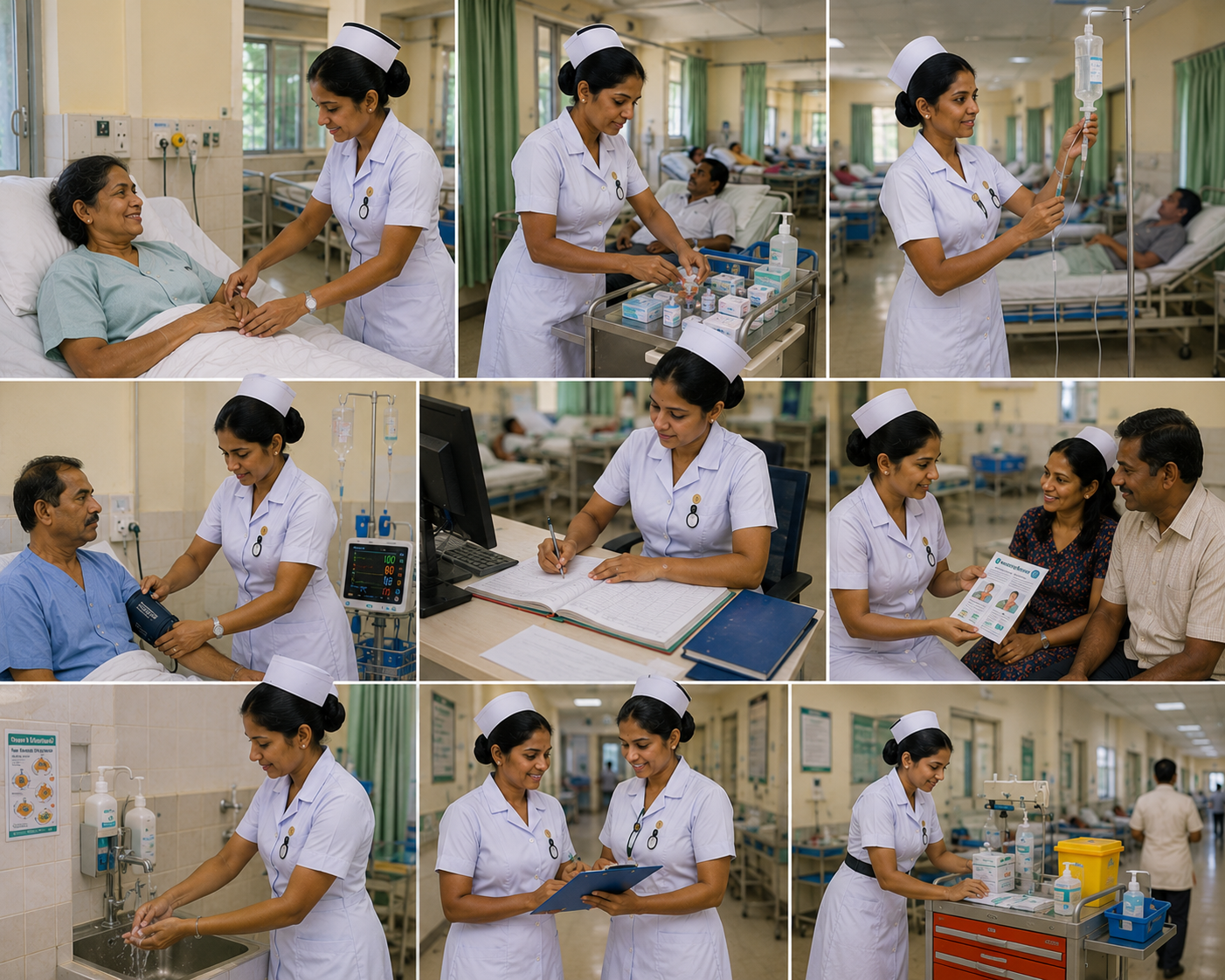
When most people think about a nurse, they picture someone from the patient's side of the bed. A figure in a uniform who adjusts an IV drip, takes a temperature, or offers a reassuring word before a procedure. It is a real image. But it is incomplete.
Seeing only the front of a building tells you nothing about what supports it.
The Two Versions of the Nurse
Sri Lankan culture has given us two very different pictures of the nurse. There is the tender one, captured in Wally Bastiansz's well-known song that describes the nurse as a princess of the hospital. A figure of grace. Devoted care. Gentleness.
There is also a harsher image. The stern ward nurse. The one who does not smile much. The one who speaks sharply when you ask for something. The one who seems too busy or too tired to stop and listen.
The truth lives somewhere between these two portraits. Nurses are neither angels nor symbols of cold efficiency. We are human beings doing an extraordinary job under constant pressure. The gap between how people imagine us and how we actually live our professional lives is one of the most important stories in Sri Lankan healthcare.
What Makes Nurses Different
Here is something the public rarely understands. Nurses are the only health professionals who stay with patients twenty-four hours a day, seven days a week, without interruption.
A doctor visits the ward, examines patients, gives instructions, and moves on to the next case. A consultant comes in, reviews the records, makes decisions, and leaves. Even a house officer who stays longer than most eventually goes home to rest or study. The ward needs to function without them.
But a nurse does not leave. From the moment a patient is admitted until they go home or are transferred elsewhere, the nurse is present. That continuous presence is not just logistical. It is the foundation on which safe hospital care rests.
Why This Matters
When I was working, I used to notice things. A slight change in how a patient was breathing. The way someone's color changed. The subtle signs that something serious was beginning to happen. These are not the dramatic moments you see on television. They are the quiet, easy-to-miss signals that separate a patient who gets help in time from a patient who does not.
Nurses catch those signals because we are there. We are there at three in the morning when medications need to be given. We are there when a patient wakes up in the dark, frightened and alone, and needs someone to hold their hand or listen to their worry.
Doctors order the treatment. Nurses deliver it. Doctors make the diagnosis. Nurses monitor what happens next. Doctors give hope. Nurses provide the presence that makes hope bearable when someone is suffering.
This is not meant to diminish what doctors do. Healthcare is a team effort. Physiotherapists matter. Laboratory technicians matter. Every role matters. But every team has a constant. That constant is the nurse.
When This Matters Most
I want to be clear about something important. When nursing is undervalued, when we are understaffed, when we are not supported properly, the consequences are not abstract. They are real.
They are felt in wards. They are experienced by patients. Sometimes they result in outcomes that cannot be undone.
When a nurse is responsible for too many patients, those small changes in breathing get missed. When a nurse is too exhausted to stay alert, errors happen. When a nurse is stretched so thin that there is no one to listen to a patient's fear, something important is lost.
This is why understanding who nurses actually are and what we actually do is so important. Not just for professional respect. For patient safety.
What Comes Next
In the posts ahead, we will examine exactly what nurses do in those wards. The complexity of the work. The constant decisions. The way we hold together systems that are falling apart.
You will see that nursing is far more than what appears from the patient's side of the bed. And once you understand that, you will understand why it matters so much that we get this right.


Comments
Post a Comment